Tracking Strength and Performance Progress (and my March goals!)
National Eating Disorder Awareness Week was last week, so I’ve been feeling motivated to really focus on why I started training in the first place. With that in mind, I thought it would be a great time to talk about how to take focus away from weight loss in a fitness program. A great way to do this is to discuss and set performance based goals. These are goals that focus on progress in strength and athleticism rather than physical appearance.
While aesthetics based goals (fat loss, measurements, fitting into a piece of clothing, etc) and process based goals (working out 5x per week, etc) are often motivating and important, performance based goals give you the chance to focus on what your body is capable of and how much more it can be capable of with regular exercise. For me, setting performance based goals has been an important step towards really viewing exercise as a celebration of what my body is capable of.
So, as you might have guessed, my March goals are focused on improved performance! I’ll also be continuing to work on my February goals, but won’t be adding new ones as they’re already challenging enough for me (plus, I’m going on vacation!).
For accountability (and inspiration?), here are my March goals:
Process/habit based goals from February (I talked about the importance of these and how to establish them here):
Continue to exercise 6x per week - 5x 25-40 min strength sessions and 5-6 30 minute cardio sessions.
Continue to drink 2L of water per day.
Continue to sleep 7-8 hrs a night.
Limit to 6 drinks per week more consistently.
Performance based goals:
Increase 5 repetition squat weight and bench press weight by 20%.
Do a pistol squat on both legs with no assistance.
Progress to a pull up with less assistance, but still assisted (goals have to be attainable!). I will track this by noting the resistance band I am using.
How create and track progress for performance based goals:
If your goals are well structured, the tracking part should come easily. No matter your goal, training can be pretty straight forward. The hard part is consistently putting in the work. Here’s where to start:
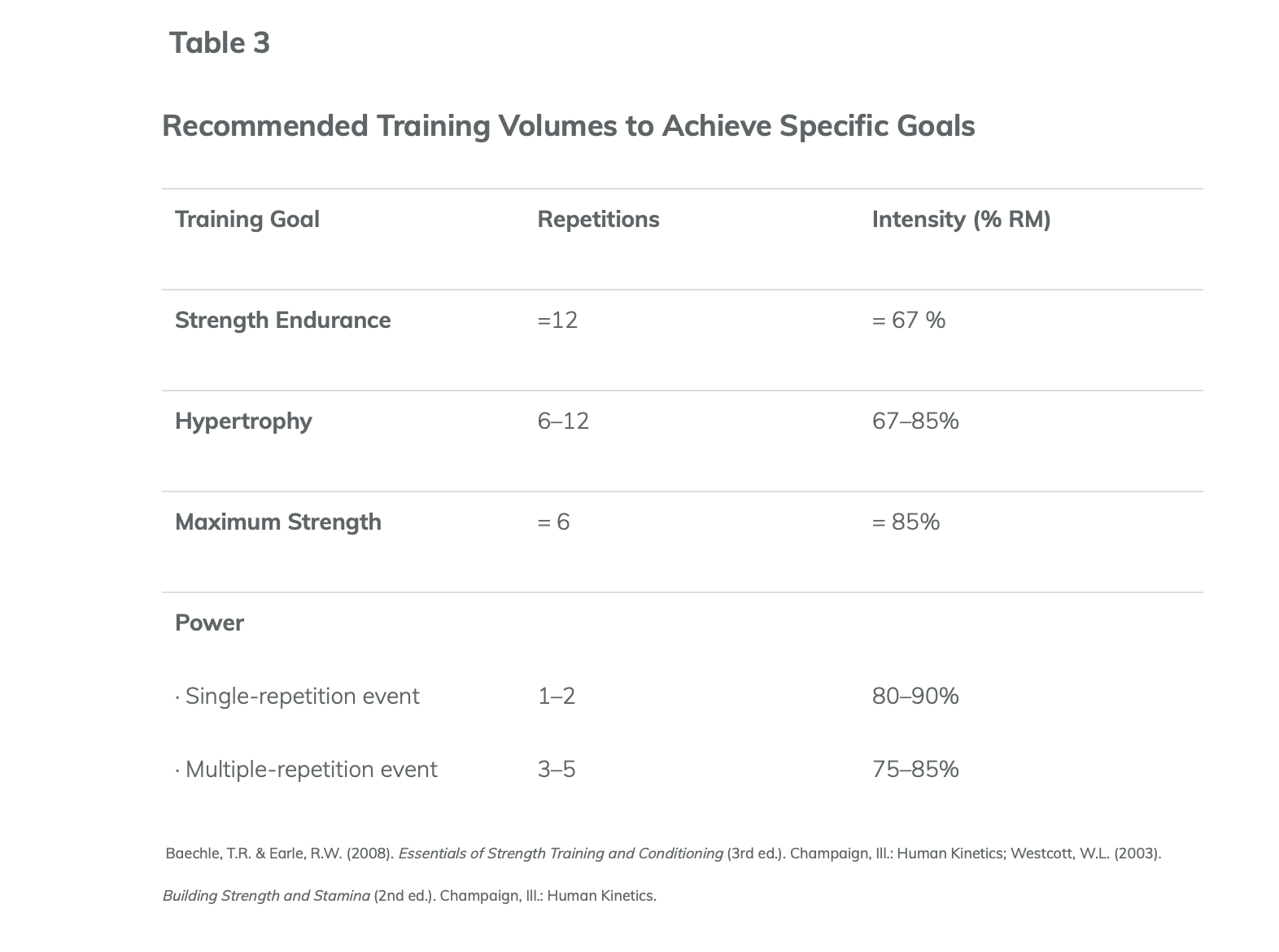
Decide on you goal. Are you training for muscular endurance? Definition? Strength? Power? Ask me to help with goal setting during a remote or in person consult! If you prefer to learn on your own, I went over a few standard strength training goals and the appropriate workout style to get you there in this post. Record the weight you lift for key exercises like squat, bench press, deadlift, overhead press. Record number of reps for things like push-ups and pull-ups. Record time for things like a 1 mile run, 500m row, bike ride, etc. Use weights and distances that are relevant to your goals (see Table 3 image for guidelines). Reassess at the end of the month to see how you’ve progressed. A month isn’t long, but it’s long enough to get used to tracking your performance based goals. After March, make adjustments as needed for slightly longer term goals.
Use these numbers (and just how confident you felt during the move) to help determine what you want to work on most this month. Since everything in the body works together, it’s important to build balanced strength. You can’t build functional lower body strength without the upper body and core strength that it takes to handle the resistance properly. Same goes for endurance sports, if you want to make efficient progress you need a well rounded training program.
Progress towards your goal. Using safe, appropriate methods, increase either the intensity of the weight load or the number of repetitions per exercise as you progress. This is related to a concept called “progressive overload” Record your progress on key lifts and compare numbers as the weeks go on.
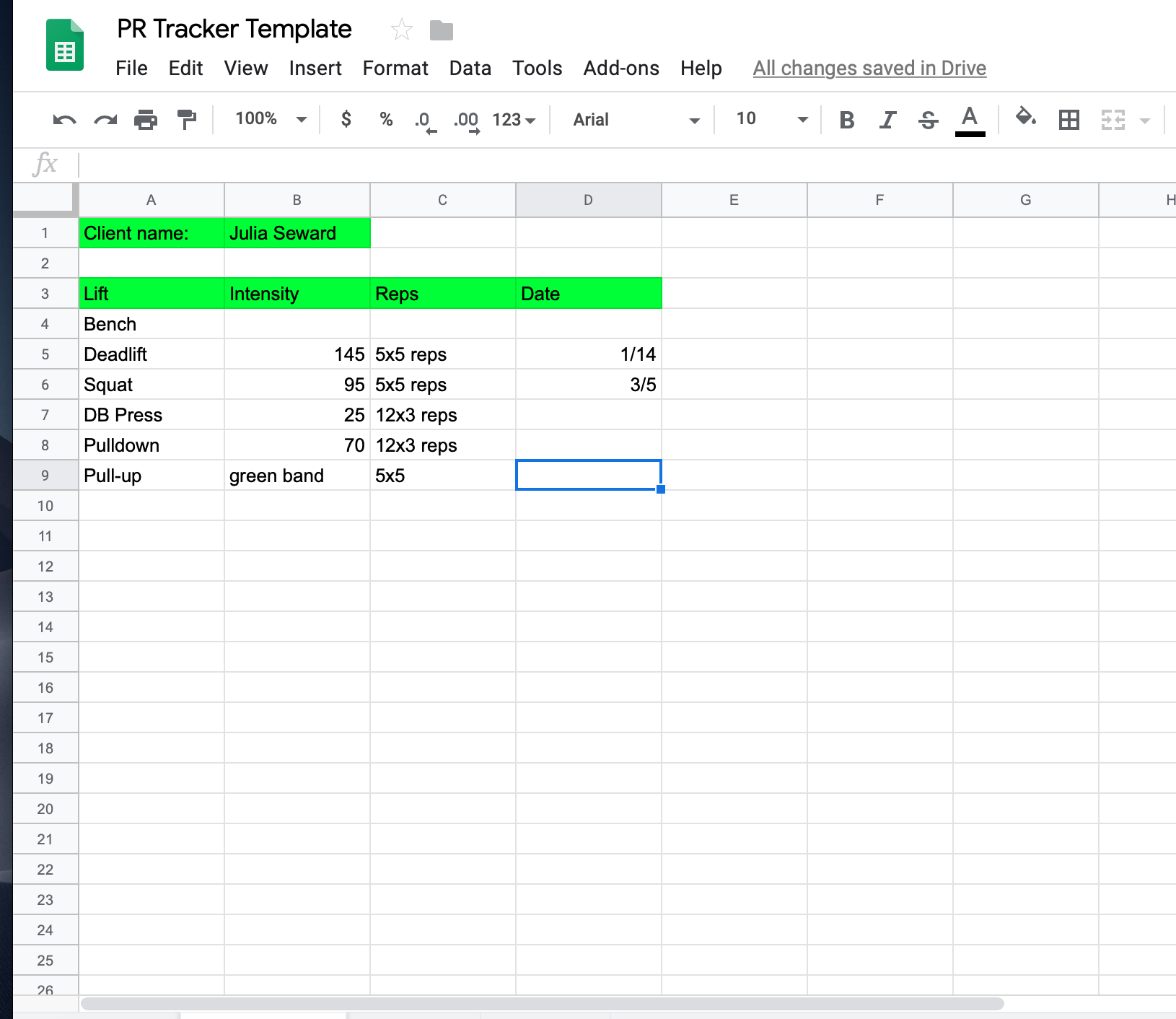
. Practice the exercise about 1-2x per week (varies by exercise and muscle group) with supporting exercises and record progress. Not sure how to keep track of that? Here’s an example of a summary page here that should list current weights used. I’d also include details on how my strength has progressed in separate tabs. If you’re my client, ask me to track this for you!
If you want more on how to go about setting write measurable, achievable goals in general my habit tracking blog. These concepts can be applied to performance based goals as well as process and weight loss/muscle gain goals.
Resources:
https://www.acefitness.org/education-and-resources/professional/expert-articles/4922/how-to-select-the-right-intensity-and-repetitions-for-your-clients
https://www.acefitness.org/fitness-certifications/resource-center/exam-preparation-blog/2894/understanding-1-rm-and-predicted-1-rm-assessments